Category: womens-health

  • Creatine for Women: Benefits, Myths, Safety, and Who Should Take It

    Creatine for Women: Benefits, Myths, Safety, and Who Should Take It

    SCIENCE VS SOCIAL MEDIA- EPISODE 04

    If you’ve spent even a few minutes on Instagram lately, you’ve probably heard someone talking about creatine, and creatine for women.

    From fitness influencers and sports nutritionists to doctors and researchers, everyone suddenly seems to be recommending it. But with all the attention comes plenty of confusion.

    Is creatine only for bodybuilders?

    Will it make women bulky?

    Does it damage the kidneys?

    Or is it simply one of the most well-researched supplements available today?

    The good news is that decades of scientific research have answered many of these questions. While creatine has long been associated with athletes and gym enthusiasts, newer evidence suggests it may also benefit women by improving strength, exercise performance, recovery, healthy ageing, and even certain aspects of brain function.

    Let’s separate the facts from the myths.

    Quick Facts

    • Natural Compound that helps muscles produce energy.
    • Best for women who strength train, are 30+, or eat little meat.
    • Dose-3-5 mg daily
    • Loading: Optional.
    • Safe for most healthy adults.

    women showing off their muscles at the gym
    Photo by Instituto Alpha Fitness on Pexels.com

    Why Is Creatine Suddenly Everywhere?

    Creatine isn’t new.

    Scientists have been studying it for over 30 years.

    What’s changed is that researchers are now looking beyond bodybuilding. Recent studies are exploring how creatine may support women’s health across different life stages, from improving exercise performance in younger women to helping preserve muscle strength after menopause.

    As more women begin strength training, they are also asking an important question:

    “Should I be taking creatine too?”

    For many women, the answer may be yes—but understanding what creatine actually does is the first step.


    What Is Creatine?

    Creatine is a natural compound made from three amino acids: arginine, glycine, and methionine.

    Your liver, kidneys, and pancreas produce about one gram of creatine every day. You also obtain small amounts through foods like red meat and fish.

    Around 95% of the body’s creatine is stored inside skeletal muscles, where it plays a vital role in producing quick bursts of energy.

    Think of your muscles like a smartphone.

    ATP (adenosine triphosphate) is the battery that powers every movement—from climbing stairs to lifting groceries to completing a heavy squat.

    The problem is that this battery runs out very quickly during intense activity.

    Creatine works like a portable power bank. It rapidly helps regenerate ATP, allowing your muscles to keep producing energy for a little longer before they fatigue.

    That extra energy can translate into:

    • More repetitions during workouts
    • Better strength
    • Improved performance
    • Faster recovery


    Why Women Need to Know About Creatine

    For years, creatine research mainly focused on men.

    Today, scientists recognise that women have unique physiological factors that may influence creatine needs.

    Women generally have lower creatine stores than men because they naturally have less muscle mass. Many women also consume less dietary creatine, particularly those following vegetarian or vegan diets.

    Hormonal fluctuations during the menstrual cycle, pregnancy, and menopause may also influence muscle function and recovery, making this an active area of research.

    Researchers are currently exploring creatine’s potential role in:

    • Exercise performance
    • Muscle recovery
    • Healthy ageing
    • Brain function
    • Cognitive performance

    Evidence-Based Benefits of Creatine for Women

    Benefits of creatine for women

    1. Improves Strength

    Creatine consistently improves strength when combined with resistance training.

    Because your muscles can produce energy more efficiently, you’re able to lift slightly heavier weights or perform more repetitions over time.

    Those small improvements accumulate into greater strength gains.


    2. Enhances Workout Performance

    Creatine doesn’t magically build muscle overnight.Research suggests that creatine after 30 may help preserve muscle mass when combined with resistance training.

    Instead, it helps you train better.

    You may notice:

    • More repetitions
    • Better power output
    • Less early fatigue
    • Higher-quality workouts

    The better your training, the better your long-term results.


    3. Supports Faster Recovery

    Anyone who has struggled to walk downstairs after leg day understands muscle soreness.One of the biggest benefits of creatine for women is improved muscle recovery after intense workouts.

    Some studies suggest creatine may reduce exercise-induced muscle damage and support faster recovery, allowing you to maintain consistent training.

    Consistency—not perfection—is what produces lasting fitness results.


    4. Helps Build Lean Muscle

    This is where many women become nervous.

    Building lean muscle does not mean becoming bulky.

    Women naturally produce much lower testosterone levels than men, making large increases in muscle size unlikely without years of intensive training and specific nutrition.

    Instead, lean muscle helps create a stronger, firmer body while improving metabolism, balance, and daily function.


    5. Supports Healthy Ageing

    Beginning around age 30, muscle mass gradually declines in a process known as sarcopenia.

    Without resistance exercise, this loss accelerates with age.

    Maintaining muscle is about much more than appearance.

    Strong muscles support:

    • Better balance
    • Improved mobility
    • Greater independence
    • Lower risk of falls
    • Better bone health

    For women approaching menopause, preserving muscle becomes increasingly important.

    When combined with strength training, creatine may help support healthy ageing.


    6. May Support Brain Health

    Your brain also requires enormous amounts of energy.

    Researchers are studying whether creatine supplementation may help reduce mental fatigue and improve cognitive performance during periods of sleep deprivation or intense mental effort.

    While these findings are promising, research is still evolving, and creatine should not be considered a treatment for neurological conditions.


    Myth vs Fact

    MythReality
    Creatine is a steroid.❌ False. Creatine is a naturally occurring compound made from amino acids—not an anabolic steroid.
    Women become bulky.❌ False. Creatine supports lean muscle, not excessive muscle growth.
    Creatine damages kidneys.❌ Not in healthy individuals taking recommended doses.
    Only bodybuilders use creatine.❌ False. Recreational exercisers, older adults, athletes, and vegetarians may also benefit.
    You must load creatine.❌ Loading is optional. Daily use works just as well over time.
    Creatine causes hair loss.❌ Current evidence does not support a direct link.

    Does Creatine Cause Weight Gain?

    This is probably the biggest misconception.

    Creatine can increase body weight—but not because it increases body fat.

    Instead, it draws water inside muscle cells, where it supports muscle function and growth.

    Think of a healthy plant.

    Water inside the leaves keeps the plant firm and healthy.

    Similarly, water inside muscle cells helps them function more efficiently.

    This is very different from excess body fat or bloating beneath the skin.


    Is Creatine Safe?

    Is creatine safe for women?

    Among sports supplements, creatine is one of the most extensively studied.

    Research has consistently shown that 3–5 grams of creatine monohydrate per day is safe for healthy adults.

    Some people may experience mild stomach discomfort if they take large amounts at once.

    Creatine may not be appropriate for everyone.

    Speak with your healthcare professional before using creatine if you:

    • Have kidney disease
    • Are pregnant
    • Are breastfeeding
    • Take medications affecting kidney function
    • Have chronic medical conditions requiring ongoing medical care

    Who May Benefit?

    Creatine may be particularly helpful for women who:

    ✔ Lift weights

    ✔ Participate in sports

    ✔ Follow vegetarian or vegan diets

    ✔ Are over 30

    ✔ Want to preserve muscle mass

    ✔ Want improved exercise recovery


    Who Should Avoid Creatine?

    Creatine should only be used under medical supervision if you have:

    • Kidney disease
    • Pregnancy
    • Breastfeeding
    • Certain chronic medical conditions

    Which Type of Creatine Is Best?

    Despite the marketing claims surrounding expensive formulations, creatine monohydrate remains the gold standard for women.

    It is:

    • The most researched
    • Effective
    • Safe
    • Affordable

    Most speciality blends have not demonstrated superior benefits.


    How Much Should Women Take?

    The recommended creatine dosage for women is generally:

    • 3–5 grams daily
    • A loading phase is optional.
    • Taking creatine consistently every day is more important than taking it at a specific time.
    • Remember to stay adequately hydrated.

    Frequently Asked Questions

    Can teenagers take creatine?

    Creatine may be appropriate for some adolescent athletes under professional guidance, but routine supplementation should be discussed with a healthcare provider.

    Can vegetarians benefit more?

    Possibly. Since plant-based diets contain very little creatine, vegetarians often have lower baseline stores and may experience greater improvements.

    Can women take creatine while trying to lose weight?

    Yes. Creatine supports muscle preservation during weight loss and may improve training performance.

    Can I take creatine every day?

    Yes. Daily supplementation is how creatine works best.

    Can I take creatine without working out?

    Yes, but the greatest benefits occur when combined with resistance training.

    When should I take creatine?

    The timing matters less than consistency. Taking it every day is what helps your muscles maintain adequate creatine stores.


    Key Takeaways

    • Creatine is one of the most well-researched sports supplements available.
    • It helps muscles produce energy more efficiently during high-intensity exercise.
    • Women may benefit through improved strength, recovery, lean muscle, and healthy ageing.
    • Creatine is not a steroid and does not make women bulky.
    • Standard doses have not been shown to harm healthy kidneys.
    • Creatine monohydrate remains the best-supported form.
    • Pairing creatine with regular strength training offers the greatest benefits.

    Medical Disclaimer

    The information provided in this article is for educational and informational purposes only and should not be considered medical advice. It is not intended to diagnose, treat, cure, or prevent any disease. Always consult a qualified healthcare professional before starting any new supplement, medication, exercise program, or making significant changes to your health routine, especially if you are pregnant, breastfeeding, have a medical condition, or are taking prescription medications.


    References

    1. Harvard Health Publishing. What Is Creatine? Potential Benefits and Risks of This Popular Supplement.
      https://www.health.harvard.edu/exercise-and-fitness/what-is-creatine-potential-benefits-and-risks-of-this-popular-supplement
    2. PubMed Central (PMC). International Society of Sports Nutrition Position Stand: Creatine Supplementation.
      https://pmc.ncbi.nlm.nih.gov/articles/PMC12702719/
    3. Mayo Clinic. Creatine.
      https://www.mayoclinic.org/drugs-supplements-creatine/art-20347591
    4. Cleveland Clinic. Creatine: Uses, Benefits, Side Effects & Safety.
      https://my.clevelandclinic.org/health/treatments/17674-creatine
    5. Office of Dietary Supplements, National Institutes of Health (NIH). Dietary Supplements Overview. (Useful for general supplement guidance.)
      https://ods.od.nih.gov/

  • HPV Vaccine in India: An Essential Guide for Women

    HPV Vaccine in India: An Essential Guide for Women

    Your evidence-based guide to HPV vaccination and cervical cancer prevention

    Science Vs Social Media – Episode 03

    The HPV vaccine in India is one of the most effective ways to prevent cervical cancer.

    India accounts for 25% of global cervical cancer deaths. One in every five women globally who suffers from cervical cancer is from India. India ranks fourth globally in cervical cancer-related morbidity.

    HPV is a virus called Human Papillomavirus. And the vaccine is called the HPV Vaccine. Since this infection is mostly preventable, the HPV vaccine can be very helpful in the prevention of this disease. 

    Still, many questions and myths surround this conversation. Like, is it only for teenagers? Is it safe? What vaccines are available in India? Does it cause infertility?

    First things first – What is HPV? 

    As said earlier, it is a virus called Human Papillomavirus. It is a very common virus spread through close skin-to-skin contact. There are over 200 types of HPV, and about 40 of them can infect the genital area. 

    One thing that often surprises people is that not all HPV types are the same. Think of HPV as a large family with over 200 relatives. Some members of the family are relatively harmless, while a few are known troublemakers. To make things easier, doctors broadly classify HPV into two groups: 

    Low-risk HPV: These types are unlikely to cause cancer but can cause genital warts and rarely lead to cancer. HPV types 6 and 11 account for nearly 90% of genital wart cases. 

    High-risk HPV: These are the types that require more attention. If the infection persists for several years, they can cause changes in cells that may eventually lead to cancer.  

    HPV types 16 and 18 cause about 70% of cervical cancers worldwide. Other high-risk types can also lead to cancers of the vulva, anus, penis, and the back of the throat. 

    In most people, HPV is short-lived. The immune system quietly clears the infection without causing any symptoms, and many people never even realise they were infected. Problems arise only when certain high-risk HPV infections persist for years. 


    How Does HPV Spread?

    One of the biggest misconceptions about HPV is that it spreads only through sexual intercourse. 

    In reality, the virus is transmitted through sexual intercourse. In reality, the virus is transmitted through intimate skin-to-skin contact, which means penetration is not necessary for infection to occur. 

    One can acquire HPV through: 

    • Vaginal sex
    • Anal sex
    • Oral sex
    • Genital skin-to-skin contact 

    Because HPV infects the skin around the genitals, condoms lower the risk of spreading it but do not fully prevent it. Many people with HPV have no symptoms and can pass the virus to others without knowing.


    Why Does HPV Matter? 

    HPV causes almost all cases of cervical cancer, which is a major cause of cancer deaths in women around the world.

    Persistent HPV infection has also been connected to : 

    • Cervical cancer
    • Vaginal cancer 
    • Vulvar cancer
    • Anal cancer
    • Oropharyngeal (throat ) cancers
    • Genital warts

    How Does the HPV Vaccine in India Work? 

    Think of the HPV vaccine as giving your immune system a “practice run.” It teaches your body to recognise specific HPV types before you’re ever exposed to them, allowing it to respond quickly if you encounter the virus in the future. 

    The vaccine prevents HPV infection but does not treat an existing infection or cure HPV-related diseases. This is why getting vaccinated before being exposed to the virus works best.

    Research shows that HPV vaccination greatly lowers the rates of HPV infections, cervical precancers, genital warts, and cervical cancer in people who get the vaccine.


    HPV Vaccines in India : Available Option

    There are several approved HPV vaccines in India. They protect against different numbers of HPV types, but all of them work well to prevent HPV-related diseases.

    VaccineManufacturerHPV Types CoveredAvailable in India
    Cervavac®Serum Institute of India 6, 11, 16, and 18Yes
    Gardasil®MSD (Merck)6, 11, 16, and 18Yes
    Gardasil® 9MSD (Merck)6, 11, 16, 18, 31, 33, 45, 52, and 58Yes

    Note: The choice of vaccine depends on age, availability, and your healthcare provider’s recommendation.

    What is Cervavac?

    Cervavac is the first HPV vaccine developed in India. Developed by the Serum Institute of India, it was designed to make HPV vaccination more affordable and widely available while remaining safe and effective.

    Which Vaccine Should You Choose?

    All approved HPV vaccines protect well against the main cancer-causing types of HPV.

    Gardasil 9 protects against more HPV types because it covers five extra high-risk types. Still, it is better to get any approved HPV vaccine than to wait while choosing between brands. Your doctor can help you pick the right vaccine for you based on your age, what is available, and your health history.


    Who Should Get the HPV Vaccine in India?

    Children (9–14 years)

    This age is best for HPV vaccination because the immune system responds strongest before any exposure to HPV.

    Most children in this age group require two doses, given six to twelve months apart.

    Adolescents and Young Adults (15–26 years)

    If you did not get the vaccine earlier, it is still strongly recommended. Even if you have been exposed to HPV, you probably have not come into contact with every type the vaccine protects against.

    Most people aged 15 years and older require three doses.

    Adults (27–45 years)

    Adults aged 27 to 45 can still benefit from the vaccine, but the benefit is usually smaller since people are more likely to have already been exposed to HPV as they get older.

    The decision should be based on a discussion with your healthcare provider, considering your health history, future risk of exposure, and personal preferences.


    HPV Vaccine Schedule

    The recommended schedule depends on the age at which vaccination begins.

    • Ages 9–14 years: Two doses, six to twelve months apart.
    • Age 15 years and above: Three doses, usually given at 0, 1–2, and 6 months.
    • Immunocompromised individuals: Three-dose schedule regardless of age.

    It is important to complete the recommended series to achieve optimal protection.


    Science vs Social Media

    Health information spreads quickly on social media, but not everything you see is true. Personal stories can be helpful, but vaccination decisions based on strong scientific evidence, not viral posts or rumours.If you’ve ever wondered whether you really need to “balance your hormones” or whether seed cycling works, we’ve explored those claims in our Science vs Social Media series.

    Myth: “The HPV vaccine causes infertility.”

    Science says: There is no credible scientific evidence that HPV vaccines cause infertility. Large studies involving millions of people have found no association between HPV vaccination and reduced fertility. In fact, preventing HPV-related cervical disease may reduce the need for treatments that can affect future pregnancies.


    Myth: “I’m already married, so there’s no point getting vaccinated.”

    Science says: This is false. Even if you have been sexually active, you are unlikely to have been exposed to every HPV type covered by the vaccine. Vaccination may still protect against future infections with HPV strains you have not encountered. The decision should be made in consultation with your healthcare provider.


    Myth: “The HPV vaccine encourages teenagers to become sexually active.”

    Science says: Multiple studies have shown that receiving the HPV vaccine does not increase sexual activity or risky sexual behaviour. The vaccine is recommended at a younger age because it produces the strongest immune response before exposure to HPV.


    Myth: “Only girls need the HPV vaccine.”

    Science says: HPV affects both women and men. It can cause genital warts and several cancers, including anal, penile, and throat cancers. Vaccinating eligible boys and girls helps reduce the spread of HPV and protects the wider community.


    Myth: “The HPV vaccine isn’t safe.”

    Science says: HPV vaccines have been used worldwide for nearly two decades and have an excellent safety record. Hundreds of millions of doses have been administered globally, and continuous safety monitoring has consistently shown that serious side effects are extremely rare.


    Myth: “If I’m vaccinated, I don’t need a Pap smear.”

    Science says: False. While the vaccine protects against the HPV types responsible for most cervical cancers, it does not cover every cancer-causing strain. Regular cervical cancer screening remains essential, even after vaccination.


    Is the HPV Vaccine in India Safe?

    Yes. The HPV vaccine has one of the strongest safety records among modern vaccines.

    Before approval, it underwent extensive clinical trials involving thousands of participants. Since then, hundreds of millions of doses have been administered worldwide, and vaccine safety continues to be monitored by health authorities.

    Most side effects are mild and temporary, including:

    • Pain, redness, or swelling at the injection site
    • Mild fever
    • Headache
    • Fatigue
    • Muscle aches

    Some teenagers may faint for a short time after getting the vaccine. That is why doctors usually ask you to sit and wait for about 15 minutes after the shot.

    Serious side effects are very rare, and the benefits of preventing HPV-related cancers are much greater than the small risk of side effects.


    Does the HPV Vaccine Replace Cervical Cancer Screening?

    No.

    HPV vaccination and cervical cancer screening work together—they are not substitutes for one another.

    The vaccine lowers the risk of getting the most common cancer-causing HPV types, but it does not remove the risk completely. Regular screening can find abnormal cervical cells early, often before they turn into cancer.

    Depending on your age and local guidelines, your healthcare provider may recommend:

    • Pap smear (cervical cytology)
    • HPV DNA testing
    • Co-testing (Pap smear and HPV test)

    Even if you have finished the HPV vaccine series, keep getting regular cervical cancer screenings as your doctor recommends.


    HPV Vaccine During Pregnancy and Breastfeeding

    The HPV vaccine is not recommended during pregnancy. If a woman becomes pregnant after starting the vaccine series, the remaining doses should simply be postponed until after delivery. There is no evidence that the vaccine harms the developing baby.

    The vaccine is considered safe during breastfeeding, and eligible women can receive it without interrupting breastfeeding.


    Frequently Asked Questions

    • Can Married Women Still Benefit?

    Yes.

    A common myth is that you do not need the HPV vaccine after getting married or becoming sexually active.

    Although the vaccine works best before exposure to HPV, many adults have not encountered every HPV type covered by the vaccine. Vaccination may still provide protection against future infections with HPV strains you have not yet acquired.

    Being married does not eliminate the potential benefits of vaccination.


    • Can Women Over 30 Get the HPV Vaccine?

    Yes.

    Women in their 30s and even early 40s may still benefit from HPV vaccination depending on their individual circumstances.

    The decision depends on several factors, including previous HPV exposure, future risk of infection, and medical advice. Your healthcare provider can help determine whether vaccination is appropriate for you.


    • Can I get the HPV vaccine if I already have HPV?

    Yes. The vaccine does not treat an existing HPV infection, but it can still protect you against other HPV types included in the vaccine that you have not been exposed to.


    • Is there an upper age limit for HPV vaccination?

    Routine vaccination is recommended through age 26. Adults aged 27–45 years may still benefit, depending on individual circumstances, and should discuss vaccination with their healthcare provider.


    • Which HPV vaccine is better, Cervavac or Gardasil 9?

    Both are approved and effective vaccines.

    Cervavac protects against four important HPV types (6, 11, 16, and 18) and is India’s first indigenously developed HPV vaccine.

    Gardasil 9 provides broader protection by covering five additional high-risk HPV types linked to cervical cancer.

    The best vaccine is the one that is available, suits your age, and is recommended by your doctor. It is usually better not to delay vaccination while choosing between brands.


    • Does HPV vaccine protect against all cervical cancers?

    No. It protects against the HPV types responsible for the majority of cervical cancers but not every cancer-causing HPV strain. This is why regular cervical cancer screening remains important.


    • How long does protection last?

    Current evidence shows that HPV vaccines provide long-lasting protection for many years, with no indication that routine booster doses are currently needed.


    • Can I receive the vaccine after childbirth?

    Yes. If you could not finish or start the vaccine during pregnancy, you can get it after your baby is born. The vaccine is also safe while breastfeeding.


    💜 What Would I Tell My Sister?

    If my younger sister asked me whether she should get the HPV vaccine, I wouldn’t start by quoting research papers or statistics. I’d simply tell her this: if there’s a safe and effective way to reduce the risk of cervical cancer, it’s worth learning about. I’d encourage her to speak with her doctor, ask questions, and make an informed decision based on science, not social media or fear. Prevention isn’t about living in worry; it’s about giving yourself the best chance of a healthier future.

    Key Takeaways

    • HPV is one of the most common sexually transmitted infections in the world.
    • Persistent infection with high-risk HPV types is the primary cause of cervical cancer.
    • The HPV vaccine is one of the best ways to prevent cervical cancer and other diseases caused by HPV.
    • The vaccine works best when given between ages 9 and 14, before any exposure to HPV.
    • Adults, including married women and those over 30, can still benefit from the vaccine depending on their situation.
    • All approved HPV vaccines available in India are safe and effective.
    • Trust reliable medical evidence, not social media rumors, when making healthcare decisions.

    • Medical Disclaimer

    This article is for education only and is not a substitute for professional medical advice, diagnosis, or treatment. Vaccine recommendations can change based on your age, health history, and local guidelines. Always talk to a qualified healthcare professional before making decisions about HPV vaccination or cervical cancer screening.

    References

    1. Ministry of Health & Family Welfare, Government of India.
      HPV Vaccination Programme
      https://www.pib.gov.in/PressReleasePage.aspx?PRID=2234009
    2. Serum Institute of India.
      CERVAVAC® Product Information
      https://www.seruminstitute.com/product_ind_cervavac.php
    3. Indian Journal of Medical Research (IJMR).
      Human papillomavirus vaccine for cancer cervix prevention: Rationale & recommendations for implementation in India
      https://ijmr.org.in/human-papillomavirus-vaccine-for-cancer-cervix-prevention-rationale-recommendations-for-implementation-in-india/
    4. Indian Association of Preventive & Social Medicine (IAPSM).
      Position Paper on Human Papillomavirus (HPV) Vaccination
      https://pmc.ncbi.nlm.nih.gov/articles/PMC11927823/
    5. Foundation for Oncology and Gynecological Society of India (FOGSI).
      Preventing Cervical Cancer through HPV Vaccination in India
      https://www.fogsi.org/wp-content/uploads/2024/07/HPV-VACCINATION-1.pdf
    6. Cancer Foundation of India.
      Cervical Cancer Prevention & HPV Vaccination
      https://cancerindia.org.in/cervical-cancer/
    7. World Health Organization (WHO).
      Human Papillomavirus (HPV) and Cervical Cancer
      https://www.who.int/news-room/fact-sheets/detail/human-papillomavirus-(hpv)-and-cervical-cancer

    Research Papers

  • Walking Is Not Enough: Reasons We Are Missing Women’s Health Needs

    Walking Is Not Enough: Reasons We Are Missing Women’s Health Needs

    Myth: Strength training is only for men, athletes,s or Bodybuilders

    One of the biggest myths in women’s health is that strength training is only for men, athletes, or people looking to build large muscles.

    As a result, many women spend years focusing primarily on walking, yoga, cardio, aerobics, or other calorie-burning workouts while avoiding resistance training altogether.

    The assumption seems harmless.

    After all, walking is good for health.

    But what if this well-intentioned advice is causing us to overlook some of the most important health challenges women face after the age of 30?

    The reality is that strength training is not about becoming muscular. It is about preserving muscle mass.

    Yet despite growing scientific evidence, resistance training remains one of the most underutilised tools in women’s preventive healthcare.

    Perhaps it is time to challenge the myth.

    Because the question is not whether women should lift weights.

    The question is why so many women are still being told that they don’t need to.

    Myth 1- Walking is enough to maintain Strength as We Age

    Most women are surprised to learn that muscle loss begins much earlier than they think.

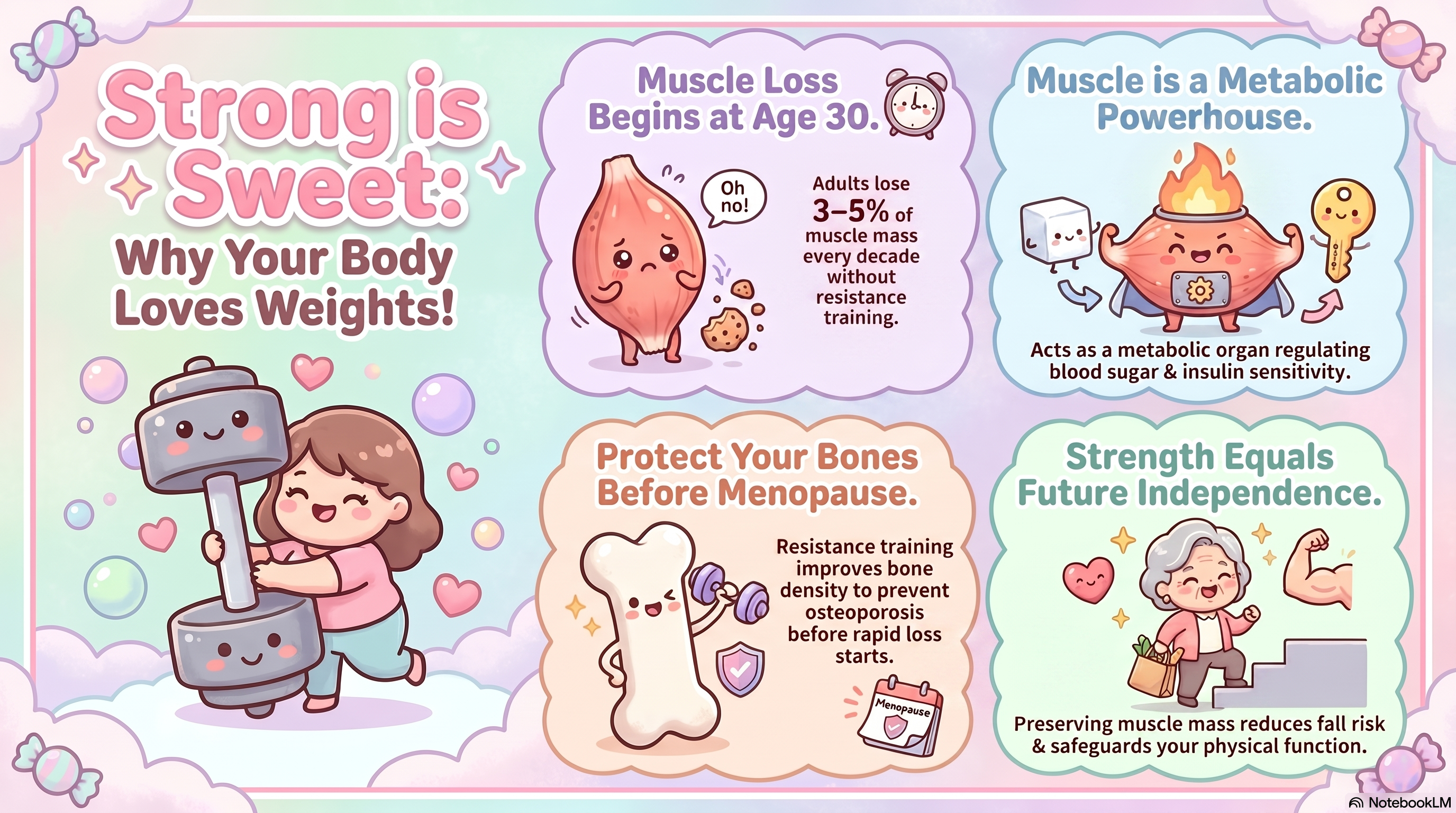
    According to the U.S. National Institutes of Health (NIH), adults begin losing muscle mass around 30 years of age, at a rate of approximately 3-5% per decade if no preventive measures are taken.

    This gradual decline, known as sarcopenia, affects strength, mobility, balance, and overall physical function.

    The consequences go far beyond appearance.

    Loss of muscle mass is associated with reduced mobility, increased risk of falls, insulin resistance, and declining functional independence later in life.

    Walking is excellent for heart health.

    However, walking alone does not provide the progressive mechanical overload required to preserve or build muscle mass.

    Strength training does.

    Myth 2- Women’s Health Is Primarily about Weight Loss

    Much of the talk around women’s health fitness revolves around losing weight.

    Calories burned

    Steps counted.

    Kilograms lost.

    A woman may lose weight while simultaneously losing muscle.

    The scale cannot distinguish between fat loss and muscle loss.

    The distinction matters because muscle functions as a metabolic organ. It plays an essential role in glucose regulation, insulin sensitivity, physical function, and healthy ageing.

    Research shows that age-related muscle decline is associated with increased risk of metabolic disorders, including insulin resistance and type 2  diabetes.

    Perhaps we should spend less time asking women how much weight they have lost and more time asking how much strength they have preserved.

    Myth 3- Bone Health Becomes Important After Menopause

    The healthcare system often begins discussing osteoporosis when women reach their 50s or 60s.

    The problem is that bone health becomes important much earlier.

    Women typically reach peak bone mass by their late twenties or early thirties. After this point, bone breakdown gradually exceeds bone formation.

    Following menopause, declining estrogen levels accelerate bone loss, with some women losing upto 20% of their bone mass within the first decade after menopause.

    This raises an important question.

    If bone loss begins years before osteoporosis is diagnosed, why are we waiting so long to discuss prevention?

    Research consistently shows that resistance training helps maintain or improve bone mineral density, particularly in post menopausal women. Recent systematic reviews and meta-analyses continue to support resistance training as an effective strategy for preserving bone health.

    The Bigger Issue

    Perhaps the reason we are missing women’s health needs is that we continue to frame exercise primarily as a tool for weight loss.

    Women’s health after 30 is not simply about becoming thinner.

    It is about preserving muscle.

    Protecting bone.

    Maintaining metabolic health

    Reducing future frailty.

    And safeguarding independence.

    Walking remains one of the most accessible and beneficial forms of physical activity.

    But walking alone cannot solve the energy challenge women face as they age.

    Strength training is not just for men.

    It is not just for athletes.

    It is certainly not just for bodybuilders.

    It may be one of the most underutilised preventive health interventions available to women today.

    The question is no longer whether women should walk; the question is why strength training is still being treated as optional when the evidence clearly suggests that it should be considered essential.

    Woman lifting weights to improve muscle strength, bone health, and healthy aging after 30
    Strength training supports muscle preservation, bone health, metabolism, and healthy aging in women.

    I am Dr Gazala Shaikh. Doctor, Medical Writer, and Health Content Strategist with over 10 years of clinical experience in healthcare.

    I write on women’s health, hormonal conditions, and evidence-based wellness, translating complex medical science into content that actually helps.

    If this article gave you clarity, share it with one woman who needs to read it.

    Follow me here on LinkedIn for more.