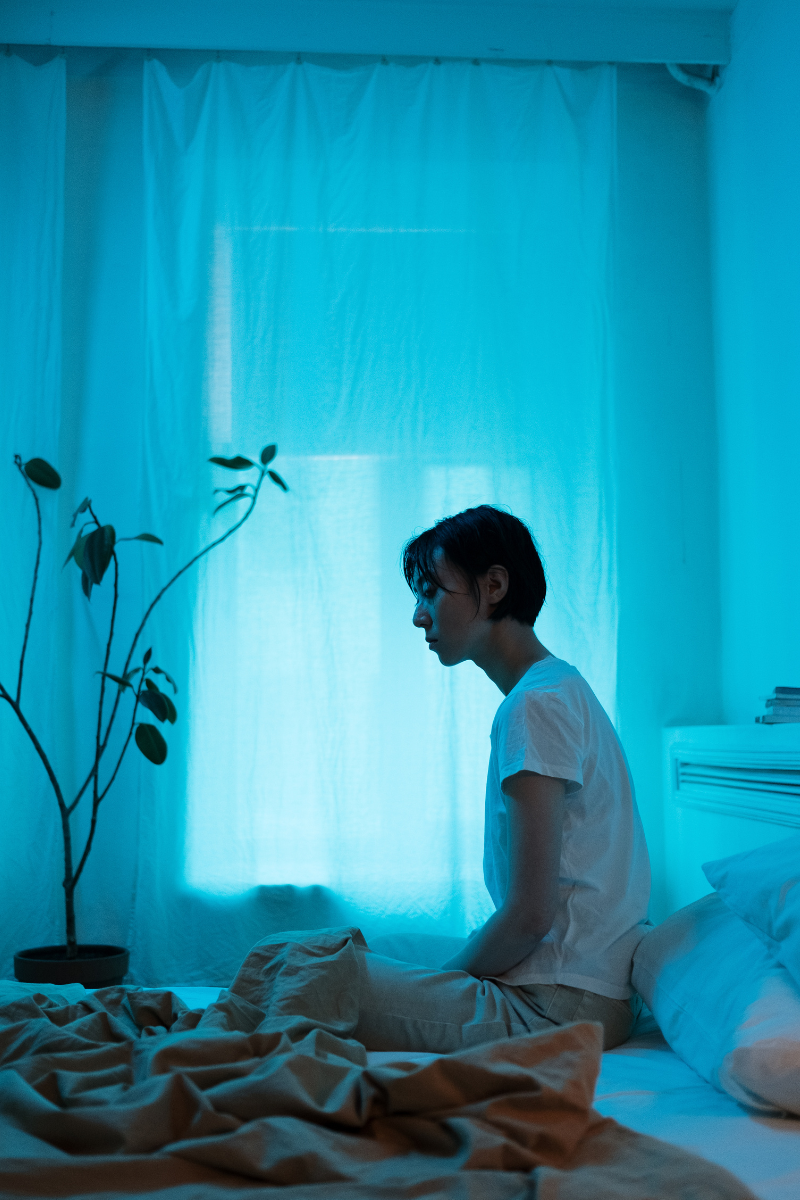
“Love as we know it ” series

Emotions are the basic core, the very cell, of being human.
They connect one person to another.
They show whether you are sensitive or not.
Whether you cried after watching a movie, felt moved by someone’s pain, or smiled at a story that reminded you of yourself, emotions define our humanness.

If you’re a reader, you reflect emotions through words; you can cry, laugh, feel sad, and even learn from what you read. It becomes a part of you. Sensitive people often can hold a range of emotions, to understand, express, and absorb them fully.
Some find solace in music, crying, smiling, or simply sitting by the window, imagining themselves singing those songs with someone they love.
These are all signs of a person who understands emotion, who can reflect it upon themselves and feel connected.
We teach children about emotions, but I often wonder, do we really have to teach them?
Then I realise, it’s not about helping them grow emotions, but helping them understand other people’s emotions and how to handle them.
These are the foundations of human existence. It’s what makes us human.
Yet we live in a world where everyone is connected with one click, and somehow, it has never been harder to understand or express what we feel.
Living under the same roof, we still miss our partner’s emotions.
We think watching Netflix together and “chilling” is enough to make a relationship work — but it goes far beyond that.
Some relationships fall apart not because of a lack of love, but because there was no communication, no expression, and no effort to feel and understand each other.
The Culture of Chill

We are surrounded by people who want to stay unbothered.
We don’t want to show our feelings, because it makes us feel vulnerable — and we fear that.
Once someone sees us in our most vulnerable state, we feel naked, exposed, as if there are no layers left to hide behind.
We don’t want that. So, we shut ourselves down to avoid feeling exposed.
Staying chill has become a trend.
We reply late to messages just to look busy.
We say “I’m fine” while breaking inside.
We’ve built a world that worships control.
We mistake detachment for strength, silence for boundaries, and numbness for maturity.
Somewhere along the way, we learned to shrink our emotions to stay safe.
What Is Emotional Minimalism?
It’s the modern habit of feeling less, expressing less, or needing less, not because we don’t feel, but because we’ve learned that feeling deeply can hurt.

It often looks like:
- Avoiding vulnerability to appear strong.
- “Matching energy” to avoid being seen as too invested.
- Keeping emotions tidy and rational, always under control.
At first, it seems healthy, like boundaries, clarity, and maturity.
But in reality, it’s often a form of emotional self-protection.
⚖️ When Emotional Minimalism Is Good
✅ When it means emotional boundaries, knowing what’s yours to carry and what’s not.
✅ When it brings clarity, expressing feelings without drama or over-identification.
✅ When it protects you from emotional burnout, learning not to pour endlessly into one-sided relationships.
This is functional emotional minimalism: mindful, balanced, and grounded.
💔 When Emotional Minimalism Turns Harmful
🚫 When it becomes a defense mechanism instead of a choice.
🚫 When you suppress emotions just to seem “unbothered.”
🚫 When you start equating emotional detachment with strength.
🚫 When relationships feel “safe” but emotionally flat — no depth, no risk, no real intimacy.
The Cost of Playing Cool
When we master composure, we often lose connection.
People who seem calm and unbothered on the outside are usually carrying emotions they no longer feel safe expressing.
They’ve learned to manage pain by numbing it — smiling through discomfort, keeping conversations surface-level, and convincing themselves that peace means avoiding vulnerability.
But emotional restraint comes with a quiet ache.
It protects us from chaos, yes, yet it also keeps us from intimacy.
We end up living half-truths: stable but disconnected, understood by no one completely, silently starving for emotional honesty.
Learning to Feel Again
Healing doesn’t mean feeling less; it means feeling safe.
It’s about allowing emotions to exist without letting them drown you.
Vulnerability becomes an act of courage, the willingness to be seen, to risk closeness, to admit that we care.
When we stop treating feelings as flaws, connection begins to feel less like danger and more like freedom.
Because real strength isn’t built on walls, it’s built on the softness we allow ourselves to share.
Maybe the goal isn’t to stop feeling too much.
Maybe it’s to stop apologising for it.
Because the world doesn’t need colder hearts
It needs people brave enough to love deeply, even when it hurts.
Also available to read here : https://medium.com/women-write/in-a-world-that-worships-control-feeling-deeply-is-rebellion-c16f14fd49e8